How to Tell If Your Sewer Line Needs Repair: Warning Signs for Newnan Homeowners
Most plumbing problems happen inside the home, but some of the most serious issues can develop beneath your yard or driveway. Your main sewer line carries wastewater away from every sink, toilet, shower, and appliance in your home. When that line becomes blocked or damaged, the effects can quickly spread throughout your plumbing system.
Fortunately, sewer line problems usually provide a few warning signs before turning into a major emergency. Knowing what to look for can help you address the issue early and avoid extensive water damage, unpleasant odors, and costly repairs.
Here are some common signs that your Newnan home may need professional sewer line repair.
Multiple Drains Are Backing Up
A single slow or clogged drain usually indicates a problem near that particular fixture. For example, hair and soap buildup may be blocking a bathroom sink or shower drain.
However, when several drains begin backing up at the same time, the problem may be located deeper within your plumbing system. You might notice that the toilets, showers, and sinks throughout your home are all draining slowly or behaving unusually.
Because every drain eventually connects to the main sewer line, a blockage in that line can affect multiple areas of the house.
Your Toilet Gurgles or Bubbles
Strange sounds coming from your toilet should not be ignored. Gurgling and bubbling can happen when air becomes trapped inside the plumbing system because wastewater is unable to flow freely through the sewer line.
You may hear these sounds while running the washing machine, draining the bathtub, or using another plumbing fixture. In some cases, the toilet bowl water may also rise or move unexpectedly.
Occasional noises are not always an emergency, but frequent gurgling – especially when combined with slow drains – is worth having inspected.
Water Backs Up When You Use Another Fixture
One of the clearest signs of a sewer line blockage is water appearing in one fixture when you use another.
For example:
- Water may rise in the bathtub when you flush the toilet.
- The toilet may bubble when the washing machine drains.
- Water may appear in a floor drain while you run a sink.
- A downstairs shower may back up when an upstairs bathroom is used.
These problems indicate that wastewater is being redirected because it cannot move through the plumbing system normally.
You Notice Sewer Odors
Your plumbing system is designed to keep sewer gases outside your home. If you begin smelling sewage near drains, bathrooms, floors, or areas of your yard, there may be a crack, blockage, or ventilation problem somewhere in the system.
Sewer odors are more than an inconvenience. They can indicate that wastewater or sewer gases are escaping where they should not be.
A plumber can determine whether the odor is coming from a dry drain trap, a damaged pipe, a blocked vent, or the main sewer line.
There Are Unusually Green or Wet Areas in Your Yard
A damaged underground sewer pipe can leak water and waste into the surrounding soil. This may create damp, soft, or unusually green patches in your lawn.
You might notice:
- Grass growing faster in one particular area
- Puddles that remain even when it has not rained
- Soft or sunken areas in the yard
- Unpleasant odors near the ground
- Increased insect or pest activity
Because sewer lines are buried underground, changes in your landscaping may be one of the first visible signs of a leak.
Your Plumbing Problems Keep Coming Back
Clearing a drain may temporarily improve the problem, but recurring clogs can mean that the underlying issue has not been resolved.
Tree roots, damaged pipes, corrosion, grease buildup, and shifted soil can all cause repeated sewer line problems. Basic drain-cleaning products may create a temporary opening without fully removing the obstruction or repairing the damaged section of pipe.
When the same clog continues to return, it is usually time for a more thorough inspection.
What Causes Sewer Line Problems?
Sewer lines can become damaged or blocked for several reasons. Some problems develop gradually over many years, while others happen unexpectedly.
Common causes include:
Tree Root Intrusion
Tree roots naturally grow toward sources of water. Small cracks or loose connections in a sewer pipe can allow roots to enter the line. Once inside, the roots continue growing and may eventually restrict or completely block the flow of wastewater.
Grease and Debris Buildup
Cooking grease, wipes, paper products, hygiene items, and other materials can accumulate inside sewer pipes. Even products labeled “flushable” may not break down quickly enough to move safely through the plumbing system.
Aging or Corroded Pipes
Older homes may have sewer lines made from materials that become brittle, corroded, or damaged over time. The pipe may crack, collapse, or develop rough interior surfaces that collect debris.
Shifting Soil
Heavy rain, erosion, construction, and natural soil movement can cause underground pipes to shift or separate. A section of the sewer line may also begin to sag, creating a low area where waste repeatedly collects.
How Is a Sewer Line Problem Diagnosed?
Because the main sewer line is underground, determining the cause of the problem usually requires more than simply looking down a drain.
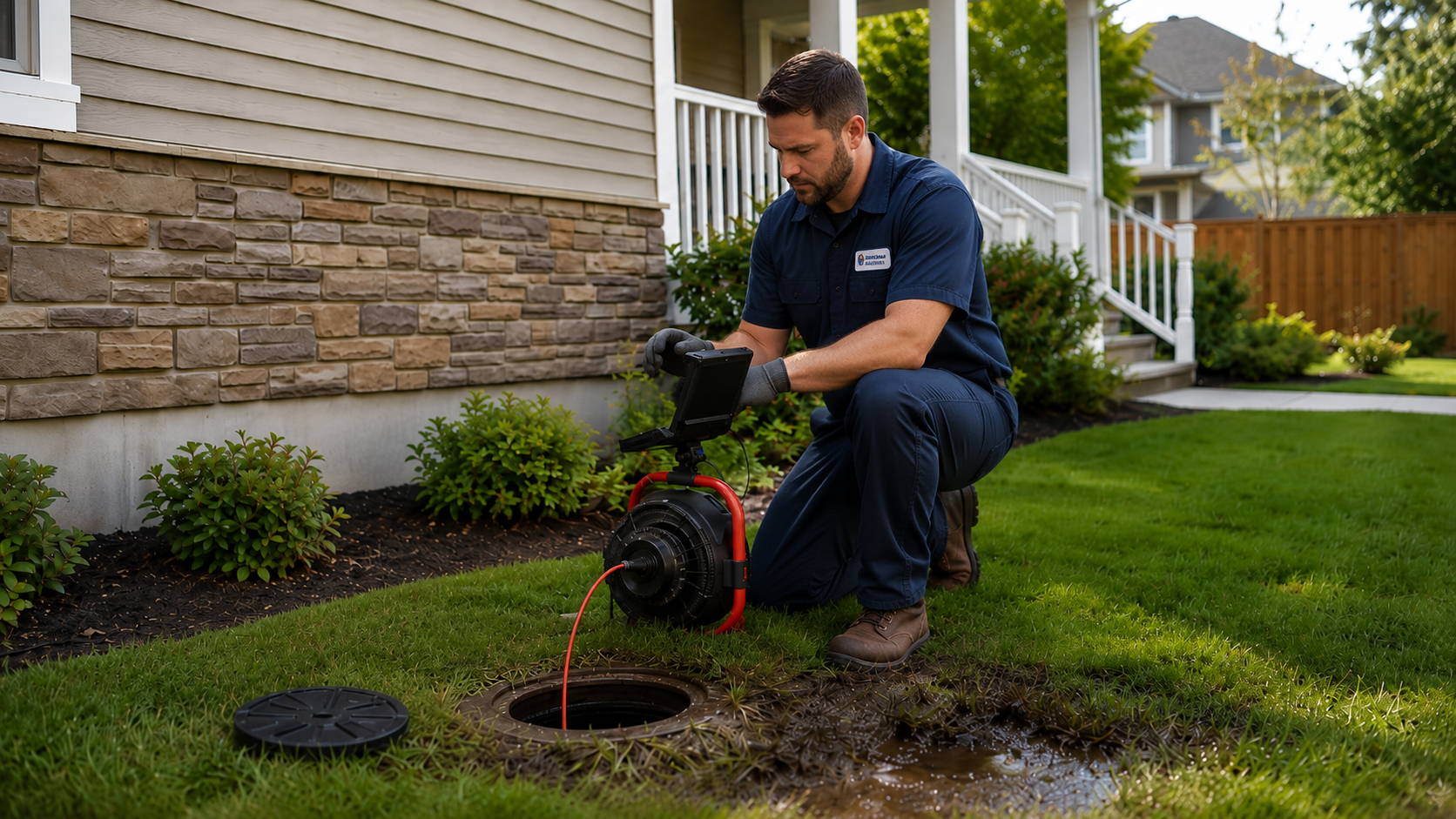
A professional plumber may perform a sewer camera inspection by feeding a small waterproof camera through the pipe. This provides a clear view of blockages, root intrusion, cracks, corrosion, and other damage.
Once the problem has been located, the plumber can recommend the most appropriate solution. Depending on the condition of the line, this may involve professional cleaning, removing tree roots, repairing a damaged section, or replacing part of the pipe.
Can Sewer Line Problems Be Prevented?
Not every sewer line issue can be avoided, but a few simple habits can reduce the risk of serious blockages:
- Keep grease, oil, and food scraps out of kitchen drains.
- Only flush toilet paper and human waste.
- Avoid planting large trees directly above sewer lines.
- Address recurring drain problems instead of repeatedly using chemical cleaners.
- Schedule an inspection if you live in an older home or notice ongoing plumbing changes.
Paying attention to your plumbing system can make a major difference. Sewer line problems are generally easier and less expensive to address before wastewater begins backing up into the home.
Sewer Line Repair in Newnan, GA
Slow drains, unusual toilet noises, sewer odors, and recurring backups may all point to a problem with your main sewer line. Ignoring these warning signs can allow a small blockage or crack to become a much larger plumbing emergency.
GoRapid Plumbing helps homeowners throughout Newnan, Coweta County, and surrounding communities diagnose and repair sewer line problems. Our team can inspect your plumbing system, explain what is causing the issue, and recommend a practical solution for your home.
Contact GoRapid Plumbing today to schedule sewer line service or request a plumbing inspection.
0 Comments